Christian Poetry and Art
Christian poetry finds wonderful expression in many of the books of the Bible. The moving words of the Psalms, the joy of Isaiah and the gut wrenching grief expressed in the poetry of Jeremiah's Lamentations are a few examples that are beloved to Christians.
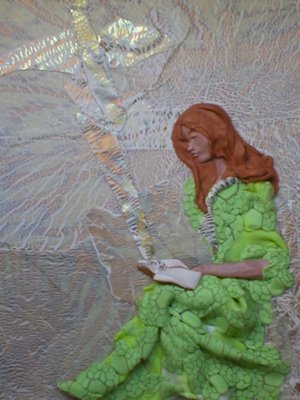
Invitation to the Banquet, Polymer Clay, Sara Joseph
With passion and pathos they give expression to the longings of the human heart and to the grandeur of the unseen God of the universe. In poetic exuberance they describe the infinite in finite words.
Words have power. However, the act of creatively using words doesn’t usually combine too readily with visual creativity.
Studies of left and right-brained activity indicate that to be effective as a visual artist, you must shut off the critical, verbal, analytical left-brain. The visually expressive right brain is the part of you that is spontaneously creative, in a silent, nonverbal fashion. The verbal and non-verbal parts of your brain have a tough time comfortably co-existing. One or the other dominates at any given time.
Betty Edwards’ classic book, Drawing on the Right Side of the Brain, explores this whole phenomenon in great detail. It teaches aspiring artists how to silence the left-brain in order to create art.
Some of my work, while meaningful to me, appealed to others only from a visual perspective. My audience responded to the color, design or style. The story behind the art was initially left unsaid.
Later, when I experimented with enhancing the art with poetry, I found that I better achieved my creative
objective. It was a strange marriage of words and art, but it somehow seemed to work with some of the art.
With poetry you can play with words just like you would with color, line, texture and design. It is possible to be enigmatic and subtle. Rhythm is just as important in Christian poetry as it is in art.
It is possible be lighthearted or somber. By juggling the right words with grace, you can gently express your ideas, tell your story, and effectively turn your viewer over to the art. The art then acquires richer meaning and delight.
Combine poetry with art when you feel, as I did, that the artwork alone somehow does
not tell the whole story. Then you will discover its potential as a
powerful tool to complement your work.
Here are some quick suggestions to help you get started:
• Step away from your art briefly, and write down words that best describe the work – these must be words that add to the work, but are not immediately apparent when viewing it.
• Play with the words themselves – do they tell a bigger story? Did you learn something from the making of this work that you would like to share?
• Then go for it – establish a rhythm, substitute, replace or rearrange words, if necessary. Always test your rhythms by reading your poetry out loud.
• Remember the "suggest, don’t state" principle.
• Keep your final objective in mind – there is no right or wrong way of writing Christian poetry, any more than there are hard and fast rules for creating Christian art.
• Do not compromise your unique style of expression by imitating anyone.
• Be yourself – and share yourself.
I have included some of my artwork with my poetry, to help you see how I
have used it. My collectors have told me that they enjoyed the combination of the
Christian poetry as well as the art.
Sow in Tears, Reap with Joy
Through the Valley
Red
The Supreme Gift
Rahab
Psalm 23
Return from Christian Poetry to Christian Artist Home


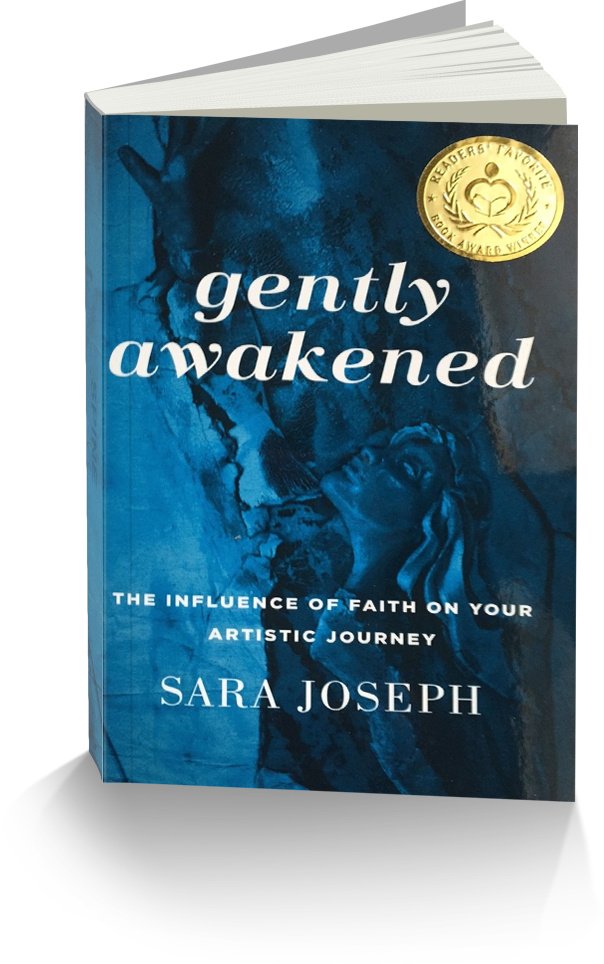
2014 Readers' Favorite International Book Award Gold Medal Winner - Christian NonFiction & Illustration
What's New


-
Contemporary Christian Art
 Contemporary christian art: A fresh take on the beloved and familiar Psalm 23.
 -
Grief, Joy and Art
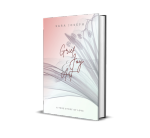 Grief, Joy and Art is a true story woven around a work of art and a romance born from grief and loss
 -
Pro-life Art
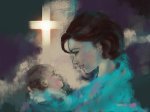 Pro-life Art: a celebration of life despite its many challenges
 -
Imagination
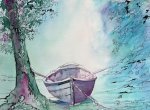 Imagination: Biblical truths for creative growth
© Copyright 2008 - 2022 www.christian-artist-resource.com
All rights to written and graphic content reserved. Please do not copy. If you need something, please ask first.